
The Beautiful Illusion of the White City
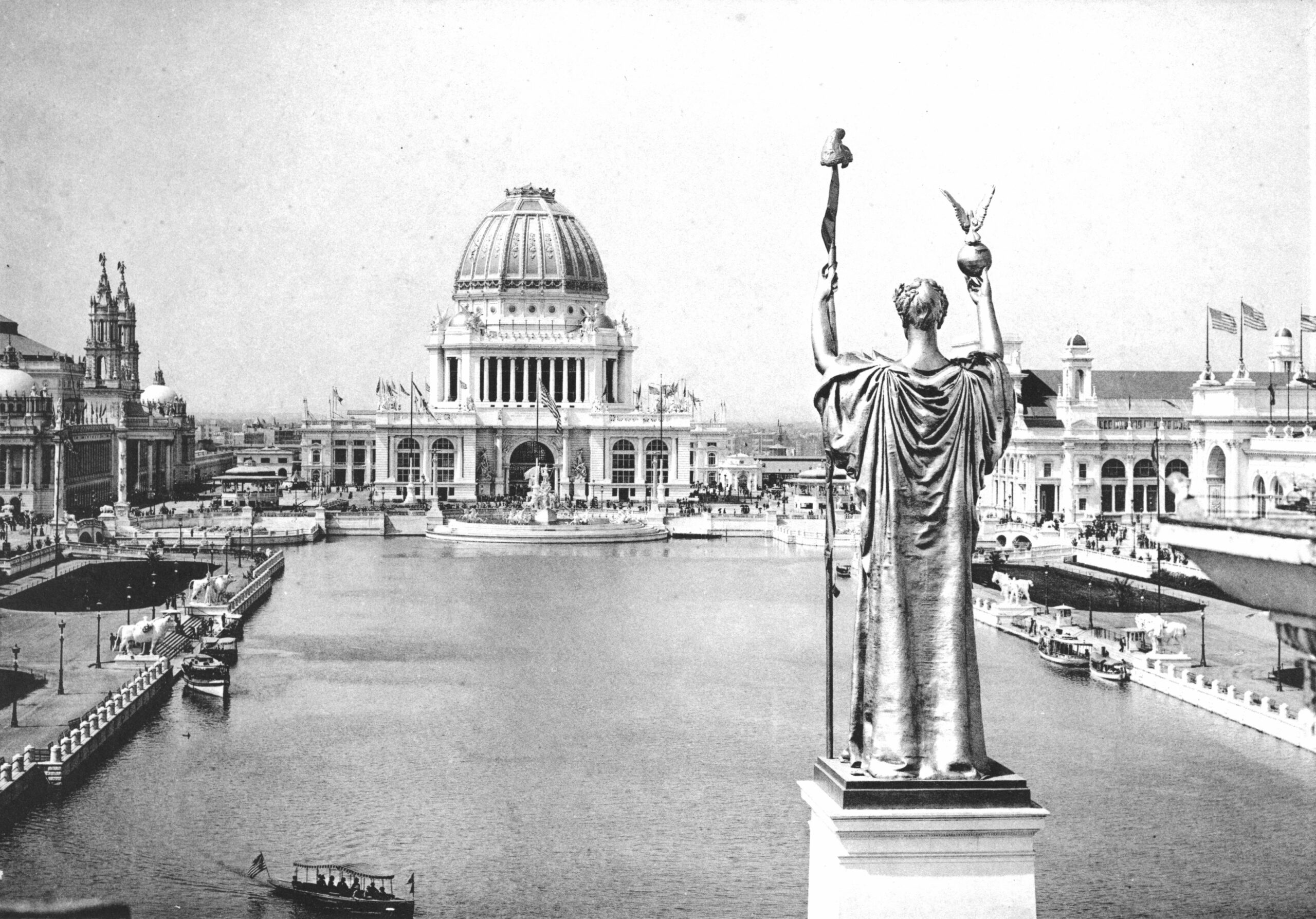
In 1893, Chicago was glowing with pride. The World’s Columbian Exposition, also known as the White City, showcased the power of progress and invention. Millions came from around the world to see electric lights, grand buildings, and human achievement on full display.
But only a few miles away, another man was busy building something very different – a hotel that would become one of the darkest places in American history.
Dr. H. H. Holmes: The Man Behind the Mask
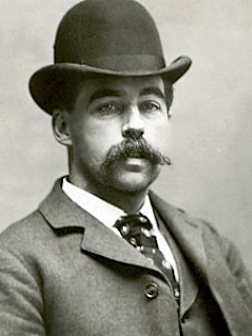
His real name was Herman Webster Mudgett, but he preferred to call himself Dr. Henry Howard Holmes.
Educated, handsome, and soft-spoken, Holmes had a gift for making people trust him. He called himself a doctor, a businessman, and an inventor. In truth, he was a master manipulator — and a cold-blooded killer.
He began constructing a massive three-story building in Chicago’s Englewood neighbourhood. Locals thought it would be a luxury hotel for visitors to the World’s Fair.
But the workers who built it noticed something odd…
Inside the “Murder Castle”
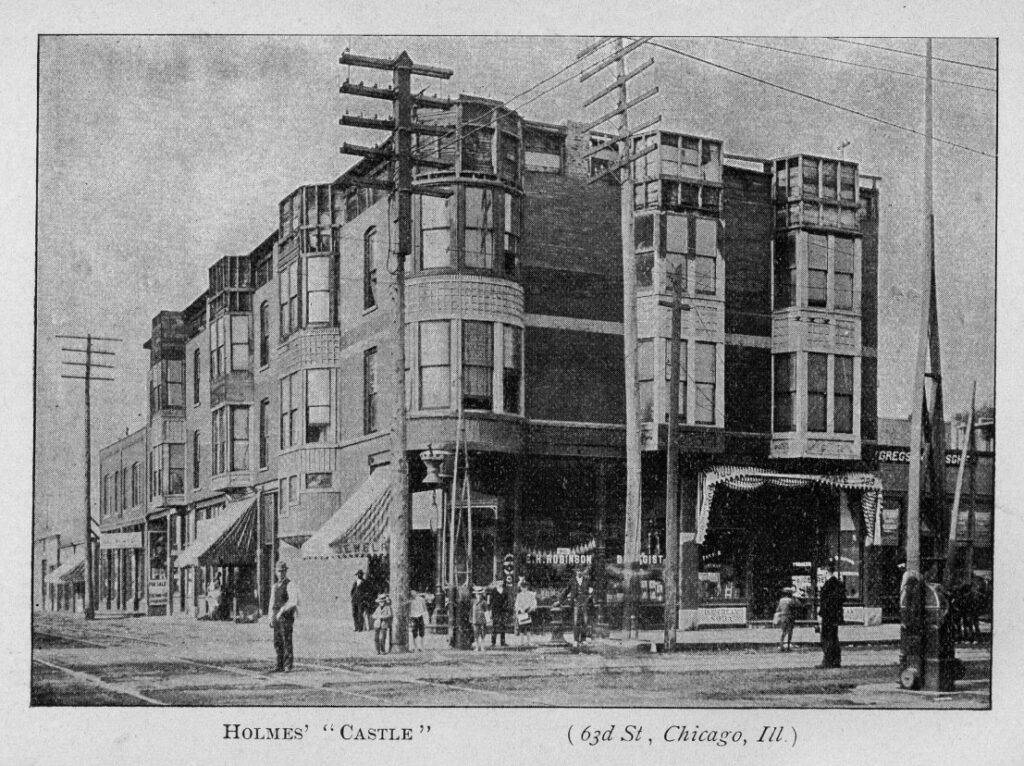
The castle was a maze of strange, horrifying designs, including windowless rooms, hallways that led to dead ends, and hidden chutes that dropped straight to the basement, secret gas pipes in the walls, and a giant furnace below.
No single worker ever saw the entire blueprint- Holmes kept firing and rehiring construction crews to protect his secret.
Inside that building, he created a house of traps designed not for comfort… but for killing.
The Horrors Within
During the World’s Fair, Holmes rented rooms to travelers, young women, and newlyweds visiting Chicago.
Many checked in with excitement — and were never seen again.
Holmes would lure victims with promises of jobs or love, only to seal their fate within the walls of his “Castle.”
Some rooms could be filled with gas at the turn of a knob. Others had soundproof padding so no one could hear the screams.
In the basement, he had acid vats, surgical tables, and a cremation furnace. The bodies were destroyed, and sometimes, the skeletons were sold to medical schools for profit.
Holmes had turned murder… into a business.
The Investigation That Exposed a Monster
For years, Holmes kept escaping suspicion. He changed names, moved cities, and left behind unpaid bills and missing people.
But in 1894, his luck ran out.
Detective Frank Geyer began investigating the disappearance of three children Holmes had been traveling with. Following a trail of rented apartments and buried evidence, Geyer uncovered the horrifying truth — the children had been killed and buried in a basement in Toronto.
Soon after, police searched Holmes’ Chicago “hotel.” What they found defied belief — bones, charred remains, and evidence of dozens of missing victims.
The Devil Meets Justice

Holmes was arrested and eventually confessed to 27 murders, though experts believe he may have killed more than 200 people.
When asked why he did it, Holmes chillingly said:
“I was born with the Devil in me.”
He was hanged in 1896. But even in death, his legend refused to die.
It took him nearly 20 minutes to die on the gallows — a slow, strangled death for a man who had caused so much suffering.
The Aftermath and Legacy
After his execution, strange things began to happen.
People connected to his case died mysteriously.
And the building itself – the Murder Castle- burned to the ground a year later under mysterious circumstances.
Some say Chicago wanted to erase it.
Others say something darker didn’t want to stay buried.
What Made H. H. Holmes Different?
Holmes wasn’t just a killer. He was one of the first to use psychological manipulation, architecture, and charm as tools of murder.
He preyed on the hope and curiosity of a new age — when science was rising, and trust came easily.
His story reminds us that evil doesn’t always look monstrous.
Sometimes, it looks polite. Intelligent. Helpful.
And that’s what makes it so terrifying.
